According to SPER Market Research, the Global Boron Arsenide (Bas) Market is estimated to reach USD 239.26 million by 2034 with a CAGR of 18.56%.
Introduction and Overview
The report includes an in-depth analysis of the Global Boron Arsenide (Bas) Market, including market size and trends, product mix, Applications, and supplier analysis.
The global Boron Arsenide (Bas) Market was valued at USD 43.6 million in 2024, and it is expected to rise at a 18.56% CAGR from 2025 to 2034. the growing need for advanced semiconductor materials that can meet the performance demands of next-generation electronic systems. One of the key drivers is the rapid expansion of high-performance and miniaturized electronics, where efficient heat dissipation is critical. Boron arsenide’s exceptionally high thermal conductivity makes it highly attractive for thermal management in power electronics, CPUs, GPUs, and data centres.
By Form Insights
The powder is the dominant segment in the boron arsenide market due to its broad applicability and ease of use across multiple advanced manufacturing processes. Boron arsenide powders are widely utilized in additive manufacturing and powder metallurgy, where they enable the development of advanced composite materials with enhanced thermal and electronic properties. Their versatility makes them well suited for research as well as industrial-scale applications, particularly in the development of energy-responsive and multifunctional materials. Strong interest from government and research institutions in semiconductor powders, combined with their relatively simpler processing and integration compared to crystals and thin films, continues to drive higher adoption of this segment and reinforces its leading position in the market.
By Purity Level Insights
The 99.9%–99.99% purity segment is the dominant segment by purity level in the boron arsenide market. This segment leads because it offers an optimal balance between high material performance and cost-effectiveness, making it suitable for most semiconductor and thermal management applications. Materials within this purity range deliver the thermal conductivity, electrical stability, and reliability required for high-performance electronics, power devices, and RF applications, without the significantly higher production costs associated with ultra-high-purity grades. As a result, manufacturers widely prefer this purity level for commercial-scale production, research activities, and advanced industrial applications, driving its higher adoption compared to lower and ultra-high purity segments.
By Production Method Insights
The chemical vapor deposition (CVD) is the dominant segment in the boron arsenide market due to its ability to produce high-precision, high-performance materials with excellent consistency and reliability. CVD is widely preferred for advanced semiconductor manufacturing because it enables superior control over material composition, thickness, and purity, which are critical for next-generation electronic and energy-efficient devices. Growing demand for stable and high-quality semiconductor materials has strengthened the role of CVD in producing boron arsenide for cutting-edge applications. While HPHT synthesis plays a crucial role in specialized areas such as aerospace and defence where large, high-purity crystals are required for extreme operating conditions its application remains more niche. In contrast, the scalability, versatility, and compatibility of CVD with modern semiconductor fabrication processes make it the leading and most commercially adopted segment in the market.
By Application Insights
The thermal management application is the dominant segment in the boron arsenide market because of the material’s exceptional ability to dissipate heat in high-performance electronic systems. Boron arsenide’s extremely high thermal conductivity makes it highly effective in improving heat control in power electronics, advanced computing systems, and next-generation semiconductor devices, where overheating is a major performance constraint. As electronic devices become smaller, more powerful, and more energy-intensive, efficient cooling solutions are increasingly critical, particularly in data centres, consumer electronics, and wearable technologies. The growing adoption of power and RF semiconductors in industries such as telecommunications and electric vehicles further strengthens demand for advanced thermal management materials.
Regional Insights
Asia Pacific stands as the leading region in the global market due to its rapid industrialization and large-scale infrastructure development. Strong expansion in countries such as China, India, and those in Southeast Asia continues to drive demand for high-performance protective coatings used in power generation, electronics manufacturing, and urban construction. Growing adoption of low-VOC waterborne systems, encouraged by stricter environmental regulations, is further boosting the use of fluoropolymer coatings. Additionally, the region’s fast-growing wind energy sector and expanding electric vehicle powertrain production are supporting the rising need for durable, non-stick coating solutions. Together, these factors firmly establish Asia Pacific as the dominant regional market.
Market Competitive Landscape
The competitive landscape is moderately consolidated, with companies focusing on innovation, performance, and global expansion. Leading players continually invest in research and development to introduce advanced, eco-efficient, and high-performance fluoropolymer coatings that meet evolving industrial standards. Strategic partnerships with OEMs and end-use industries help strengthen market presence and support long-term demand. Many manufacturers are expanding production capacities and establishing local facilities in high-growth regions to enhance supply efficiency and reduce operational costs. Competitive advantage is further reinforced through customized solutions, technical expertise, and value-added services. Overall, competition centres on sustainability, reliability, and the ability to capture niche, high-value opportunities across emerging markets.
Recent Developments:
• In March 2023: Intel explored the integration of boron arsenide (BAs) into semiconductor packaging for AI processors and data centres to address overheating challenges, leveraging its extremely high thermal conductivity. However, difficulties in commercial-scale production limited successful implementation in its ultra-high-performance processor lineup.
• In July 2023: Boeing, in collaboration with research partners, focused on developing advanced cooling architectures for hypersonic and aerospace electronics using BAs, targeting improved thermal control in avionics and defence systems. Although performance exceeded that of diamond-based materials, limited material availability constrained large-scale adoption.
• In January 2024: ThermoAura advanced toward commercializing BAs-based thermal interface materials through patented synthesis techniques for electronic cooling wafers. Pilot trials with data centre and electric vehicle customers demonstrated significantly improved heat dissipation comp.
Scope of the report:
Report Metric Details
Market size available for the years 2021-2034
Base year considered 2024
Forecast Period 2025-2034
Segments Covered By Form, By Purity Level, By Production Method, By Application
Regions Covered North America, Latin America, Asia-Pacific, Europe, and Middle East & Africa
Companies Covered Coherent Corp., Momentive Performance Materials Inc., KYMA Technologies, Inc., Materion Corporation, Shin-Etsu Chemical Co., Ltd., Sumitomo Electric Industries, Ltd., Heraeus Holding GmbH, Indium Corporation, and other companies.
Key Topics Covered in the Report
• Global Boron Arsenide (Bas) Market Size (FY’2021-FY’2034)
• Overview of Global Boron Arsenide (Bas) Market
• Segmentation of Global Boron Arsenide (Bas) Market by Form (Powder, Crystal, Bulk material, other forms)
• Segmentation of Global Boron Arsenide (Bas) Market by Purity Level (99%, 99% - 99.9%, 99.9% - 99.99%, > 99.99%)
• Segmentation of Global Boron Arsenide (Bas) Market by Production Method (Chemical vapor deposition (CVD), high-pressure high-temperature (HPHT) synthesis, molecular beam epitaxy (MBE), flux growth method, and other production methods)
• Segmentation of Global Boron Arsenide (Bas) Market by Application (Thermal management, Electronics cooling, Semiconductor devices, Research & development, other applications)
• Statistical Snap of Global Boron Arsenide (Bas) Market
• Expansion Analysis of Global Boron Arsenide (Bas) Market
• Problems and Obstacles in Global Boron Arsenide (Bas) Market
• Competitive Landscape in the Global Boron Arsenide (Bas) Market
• Details on Current Investment in Global Boron Arsenide (Bas) Market
• Competitive Analysis of Global Boron Arsenide (Bas) Market
• Prominent Players in the Global Boron Arsenide (Bas) Market
• SWOT Analysis of Global Boron Arsenide (Bas) Market
• Global Boron Arsenide (Bas) Market Future Outlook and Projections (FY’2025-FY’2034)
• Recommendations from Analyst
Global Boron Arsenide (Bas) Market Size- By Form, By Purity Level, By Production Method, By Application - Regional Outlook, Competitive Strategies and Segment Forecast to 2034
1. Introduction
1.1. Scope of the report
1.2. Market segment analysis
2. Research Methodology
2.1. Research data source
2.1.1. Secondary Data
2.1.2. Primary Data
2.1.3. SPER’s internal database
2.1.4. Premium insight from KOL’s
2.2. Market size estimation
2.2.1. Top-down and Bottom-up approach
2.3. Data triangulation
3. Executive Summary
4. Market Dynamics
4.1. Driver, Restraint, Opportunity and Challenges analysis
4.1.1. Drivers
4.1.2. Restraints
4.1.3. Opportunities
4.1.4. Challenges
5. Market variable and outlook
5.1. SWOT Analysis
5.1.1. Strengths
5.1.2. Weaknesses
5.1.3. Opportunities
5.1.4. Threats
5.2. PESTEL Analysis
5.2.1. Political Landscape
5.2.2. Economic Landscape
5.2.3. Social Landscape
5.2.4. Technological Landscape
5.2.5. Environmental Landscape
5.2.6. Legal Landscape
5.3. PORTER’s Five Forces
5.3.1. Bargaining power of suppliers
5.3.2. Bargaining power of buyers
5.3.3. Threat of Substitute
5.3.4. Threat of new entrant
5.3.5. Competitive rivalry
5.4. Heat Map Analysis
6. Competitive Landscape
6.1. Global Boron Arsenide (Bas) Market Manufacturing Base Distribution, Sales Area, Product Type
6.2. Mergers & Acquisitions, Partnerships, Product Launch, and Collaboration in Global Boron Arsenide (Bas) Market
7. Global Boron Arsenide (Bas) Market, By Form (USD Million) 2021-2034
7.1. Powder
7.1.1. Nano powder
7.1.2. Micro powder
7.1.3. Other powder forms
7.2. Crystal
7.2.1. Single crystal
7.2.2. Polycrystalline
7.2.3. Thin film
7.3. Bulk material
7.4. Other forms
8. Global Boron Arsenide (Bas) Market, By Purity Level (USD Million) 2021-2034
8.1. 99%
8.2. 99% - 99.9%
8.3. 99.9% - 99.99%
8.4. > 99.99%
9. Global Boron Arsenide (Bas) Market, By Production Method (USD Million) 2021-2034
9.1. Chemical vapor deposition (CVD)
9.1.1. Atmospheric pressure CVD
9.1.2. Low pressure CVD
9.1.3. Plasma-enhanced CVD
9.2. High-pressure high-temperature (HPHT) synthesis
9.3. Molecular beam epitaxy (MBE)
9.4. Flux growth method
9.5. Other production methods
10. Global Boron Arsenide (Bas) Market, By Application (USD Million) 2021-2034
10.1. Thermal management
10.1.1. Heat sinks
10.1.2. Thermal interface materials
10.1.3. Heat spreaders
10.1.4. Other thermal management applications
10.2. Electronics cooling
10.2.1. High-power electronics
10.2.2. Data centres
10.2.3. Consumer electronics
10.2.4. Other electronics cooling applications
10.3. Semiconductor devices
10.3.1. Power electronics
10.3.2. Optoelectronics
10.3.3. High-frequency devices
10.3.4. Other semiconductor applications
10.4. Research & development
10.5. Other applications
11. Global Boron Arsenide (Bas) Market, (USD Million) 2021-2034
11.1. Global Boron Arsenide (Bas) Market Size and Market Share
12. Global Boron Arsenide (Bas) Market, By Region, (USD Million) 2021-2034
12.1. Asia-Pacific
12.1.1. Australia
12.1.2. China
12.1.3. India
12.1.4. Japan
12.1.5. South Korea
12.1.6. Rest of Asia-Pacific
12.2. Europe
12.2.1. France
12.2.2. Germany
12.2.3. Italy
12.2.4. Spain
12.2.5. United Kingdom
12.2.6. Rest of Europe
12.3. Middle East and Africa
12.3.1. Kingdom of Saudi Arabia
12.3.2. United Arab Emirates
12.3.3. Qatar
12.3.4. South Africa
12.3.5. Egypt
12.3.6. Morocco
12.3.7. Nigeria
12.3.8. Rest of Middle-East and Africa
12.4. North America
12.4.1. Canada
12.4.2. Mexico
12.4.3. United States
12.5. Latin America
12.5.1. Argentina
12.5.2. Brazil
12.5.3. Rest of Latin America
13. Company Profile
13.1. Coherent Corp.
13.1.1. Company details
13.1.2. Financial outlook
13.1.3. Product summary
13.1.4. Recent developments
13.2. Heraeus Holding GmbH
13.2.1. Company details
13.2.2. Financial outlook
13.2.3. Product summary
13.2.4. Recent developments
13.3. Indium Corporation
13.3.1. Company details
13.3.2. Financial outlook
13.3.3. Product summary
13.3.4. Recent developments
13.4. KYMA Technologies, Inc.
13.4.1. Company details
13.4.2. Financial outlook
13.4.3. Product summary
13.4.4. Recent developments
13.5. Materion Corporation
13.5.1. Company details
13.5.2. Financial outlook
13.5.3. Product summary
13.5.4. Recent developments
13.6. Momentive Performance Materials Inc.
13.6.1. Company details
13.6.2. Financial outlook
13.6.3. Product summary
13.6.4. Recent developments
13.7. Shin-Etsu Chemical Co., Ltd.
13.7.1. Company details
13.7.2. Financial outlook
13.7.3. Product summary
13.7.4. Recent developments
13.8. Sumitomo Electric Industries, Ltd.
13.8.1. Company details
13.8.2. Financial outlook
13.8.3. Product summary
13.8.4. Recent developments
13.9. Others
14. Conclusion
15. List of Abbreviations
16. Reference Links
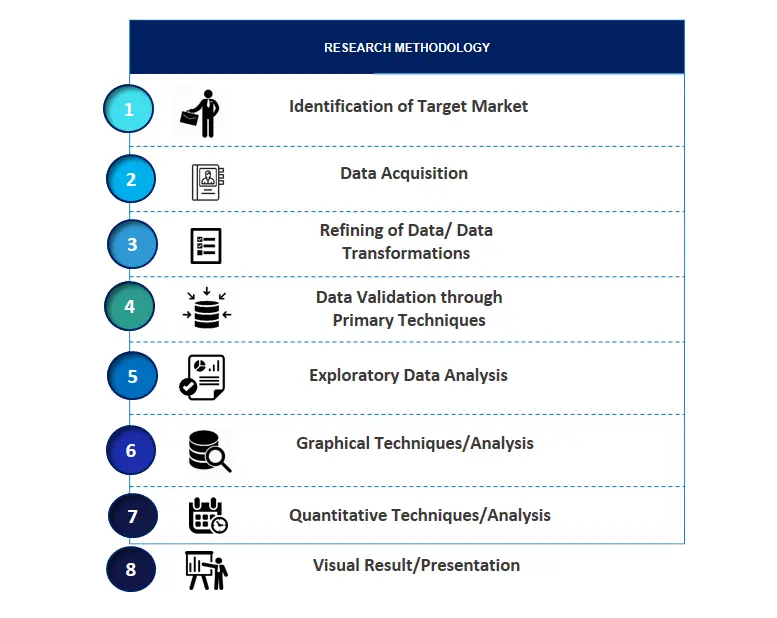
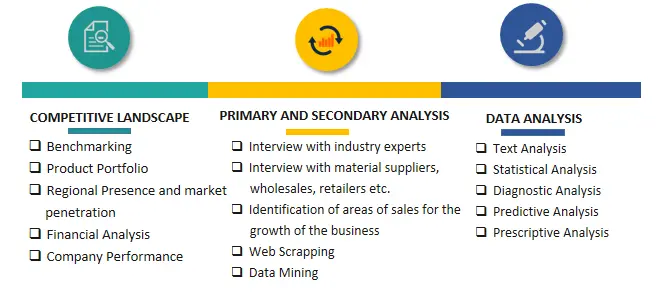
SPER Market Research’s methodology uses great emphasis on primary research to ensure that the market intelligence insights are up to date, reliable and accurate. Primary interviews are done with players involved in each phase of a supply chain to analyze the market forecasting. The secondary research method is used to help you fully understand how the future markets and the spending patterns look likes.
The report is based on in-depth qualitative and quantitative analysis of the Product Market. The quantitative analysis involves the application of various projection and sampling techniques. The qualitative analysis involves primary interviews, surveys, and vendor briefings. The data gathered as a result of these processes are validated through experts opinion. Our research methodology entails an ideal mixture of primary and secondary initiatives.